Dungeon Mode Kit
November 21, 2025
Dungeon Mode Kit
What is it??
I’ve been making small game experiments using the same collection of tiles and sounds since 2019, and this has slowly evolved into a collection of javascript tools for making small games, like turn-based roguelikes. I’m using this as part of my research-creation project at Concordia University, but my goal is to eventually have a free, web-based tool that anyone can use.
The project is currently piggybacking on top of the libraries rot.js, howler.js, tween.js and its renderer- pixi.js. It uses the free tilemap tool Tiled for drawing levels, and allows for mixing handmade and procedurally generated maps.
Repositories:
- Dungeon Mode Kit (Repo may not be public)
Documents:
Posts:
public posts?
In just a few days I’ll be starting work on an interdisciplinary humanities PhD at Concordia University in Montreal. I’ve spent the last two weeks getting settled in here. It’s lovely here but moving was hard. I thought that when I moved to California and back for my MFA work, that would be the last move I had in me. Naturally I would have to stay in Texas to be near my mother. When I got back I found, like a lot of my friends had, that Austin had become pretty uninhabitable to me outside the bubble of my own house. Outrageous prices, political hostility, ecological precarity, and most of all a lack of meaningful, stable work. I started compacting down with the rest of the sediment at the bottom of a deep lake of depression that was only allievated by continuing the work that I had started at UCLA— mainly three large writing projects, one expanding from each of the chapters of the thesis I had written. Small game prototypes supported each project. I had a little survey show of some of these early projects at The Museum of Human Achievement in 2024, and one of those prototypes has now ballooned up into a toolkit for making dungeon games that I hope to develop into a sort of Bitsy for roguelikes. I also gave a talk to my friend and past advisor Danny Snelson’s electronic literature class about interactive fiction and uses of the text parser. Danny and I also had a productive prototyping sprint on a strange narrative documentary soccer game(?) And finally, I spent this summer deep in researching and writing a long essay about future imaginaries and The Tower of Babel for a new outlet of the UCLA Game Lab in development.
More ➜
dmk embed test
Haven’t been posting about dungeon mode kit because it’s moving too fast and I already keep a changelog and do daily private posts in obsidian. I need to think about when it’s beneficial to do public posts again, probably when I’m back in a school context with advisors or playtesters (If I’m lucky enough to be back in that scenario).
More ➜
Dungeon Mode Kit
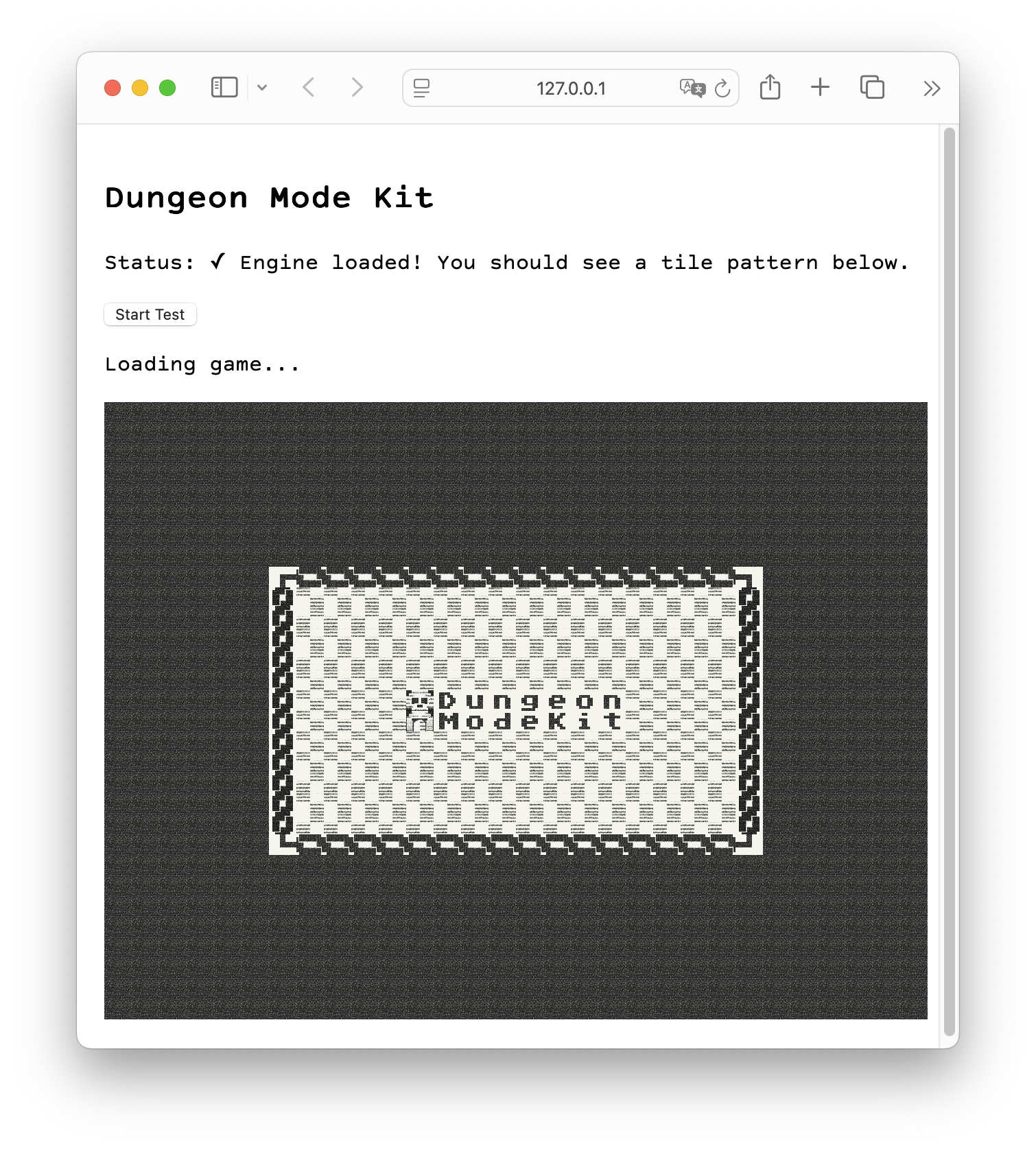 This is project start for Dungeon Mode Kit, a set of tools for prototyping games within the Dungeon Mode.
what does it look like
I’ve expressed this to Jenna, but I want this project to get its look from its processes and materials. Obelisk was a weird project where I strained to make unity look like a 1 bit Mac with some kind of big monitor and great processor and it was obviously dishonest, the comments on the itch page that I asked for where obviously fake, there was a winking fakeness about it that came from not having the resources to just write a Taskmaker-style game in Pascal or whatever on an actual old Mac. It’s ok to straddle time periods and refer to things, but I think there’s a way do do it, even with humor involved, that honestly inherits an aesthetic from actual processes instead of straining to make something look like what it isn’t.
More ➜